Hollow Pin Chains for Germany Packaging & Automation OEMs
Germany has a deep food-processing and packaging-machinery ecosystem. VDMA represents more than 320 companies across food-processing and packaging machinery, while its packaging-machinery division describes around 120 manufacturers and a sector turnover above €7.5 billion.
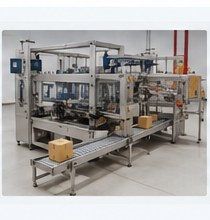
OEM engineering focus
German machinery builders commonly compete on engineering depth, modular machine platforms, safety, hygienic design and lifecycle support. A chain supplier should therefore respond with controlled dimensions, drawings and clear cross-reference logic rather than a generic “equivalent” claim.
Where hollow pins fit
Cartoners, case packers, bakery and confectionery equipment, beverage handling, pharmaceutical/cosmetic machinery and special conveyors can use hollow pins for cross-rods, fixtures and carriers.
Documentation expected
Provide dimensional drawings, material confirmation, identification of historical catalogue data versus current production data, and clear RFQ records. If a chain is a replacement for DIN-oriented equipment, measured geometry and sprocket details are especially important.
Selection direction
Compact MC chains may suit lighter packaging modules; FVC/ZC can fit larger conveyor envelopes; stainless configurations are relevant where humidity or cleaning is important. The machine geometry decides the family.
What to include in a market-ready RFQ
For OEM work, include the machine concept, required attachment spacing, selected pitch range, sprocket envelope, line speed and duty cycle. For aftermarket work, add the machine model, existing chain marking, photographs, measured pitch and hollow-pin bore, roller/bush dimensions and sprocket tooth count. If two chains are tied together by rods, include strand spacing and the rod drawing.
EVER POWER uses the market context above to understand the application, but product selection remains an engineering cross-reference. Historical catalogue data is treated as a dimensional source and current manufacturing details are confirmed at quotation stage.
Frequently asked questions
Do you recommend one chain series for the whole market?
No. MC, FVC, ZC and stainless families cover different geometries. The machine and attachment requirements decide the suitable family.
Can you cross-reference an existing European, American or Japanese machine chain?
A dimensional cross-reference is possible when sufficient measurements, photos and sprocket information are supplied. We do not claim interchangeability from a model name alone.
What should an OEM send for a new design?
Pitch constraints, sprocket centers, chain speed, load, attachment drawing, environment, material preference and expected annual quantity.
How EVER POWER supports regional OEM and replacement enquiries
Regional buyers often need two different workflows. OEM projects usually begin with a drawing, calculated chain pull and a target attachment layout. Replacement enquiries often begin with a model marking, photographs and measurements taken from an installed machine. EVER POWER uses the same dimensional checklist for both: pitch, hollow-pin bore, roller style, plate geometry, sprocket data, attachment drawing and operating environment.
For export projects, model codes and metric dimensions are preserved in the quotation data so that engineering teams in different countries can compare the same chain configuration. Final compliance for guarding, food-contact zones, machine safety and local installation remains the responsibility of the machine builder and plant operator. The chain selection page is therefore written as engineering guidance rather than as a claim that one model automatically satisfies every local rule.
Engineering information to collect before quotation
A useful RFQ should describe the chain as part of the complete machine. Record the exact pitch, hollow-pin inside diameter, roller or bush arrangement, width between inner plates, sprocket tooth count, shaft centers and the geometry of every cross-rod, flight or carrier that passes through the hollow pins. If the equipment is a replacement project, include photographs of the old chain beside a scale and of the sprocket tooth profile. These details are more reliable than a model name alone when equipment has been modified during its service life.
Operating duty should include conveyor speed, estimated chain pull, product weight, accumulation, starts per hour, shock loading, vertical lift, guide friction and the maintenance interval expected by the plant. Environment matters as well. Moisture, cleaning chemicals, food-product exposure, abrasive dust and temperature can change the preferred material, lubrication approach and guide design. Catalogue tensile or breaking values are not a direct allowable working load and should not replace an engineering duty calculation.
Installation, commissioning and maintenance
New chain should be installed on sprockets that match the selected pitch and roller or bush geometry. Check shaft and sprocket alignment before tensioning. Twin strands connected by cross-rods should be timed so that the rods do not force the chains out of phase. During commissioning, run the conveyor first without product and then under representative load while checking for guide rubbing, tight articulation, roller skidding and attachment interference.
After the first production interval, inspect elongation, stiff joints, corrosion, plate contact and cross-rod wear. Record measurements at consistent points so trends can be compared. Unequal wear between strands often indicates alignment, load-distribution or guide-friction issues that should be corrected before a replacement chain is installed.