Hollow Pin Chain Installation & Maintenance
Reliable hollow pin chain service depends on alignment, sprocket timing, attachment condition, lubrication/cleaning and periodic wear measurement.
Engineering checklist
Alignment before tension
Set shaft parallelism and sprocket alignment before adjusting chain tension. Tension cannot compensate for a crooked chain path.
Twin-strand timing
If two chains are linked by cross-rods or fixtures, both sprockets must be timed so attachments remain square. Do not force rods into misaligned hollow pins.
Slack and take-up
Provide enough slack for smooth articulation without allowing the chain to whip or climb teeth. Follow the machine builder’s take-up arrangement where available.
Wear measurement
Measure elongation over multiple pitches under light tension and compare both strands. Also inspect pin bore wear, roller/bush wear, side-plate damage and attachment holes.
Cleaning
Remove abrasive debris and product buildup without driving contamination into the joints. After washdown, verify the required lubrication and corrosion-protection procedure.
Replacement planning
Replace damaged attachments and worn sprockets with the chain where necessary. New chain on severely worn sprockets can accelerate wear and create poor engagement.
Use catalogue data as a dimensional reference
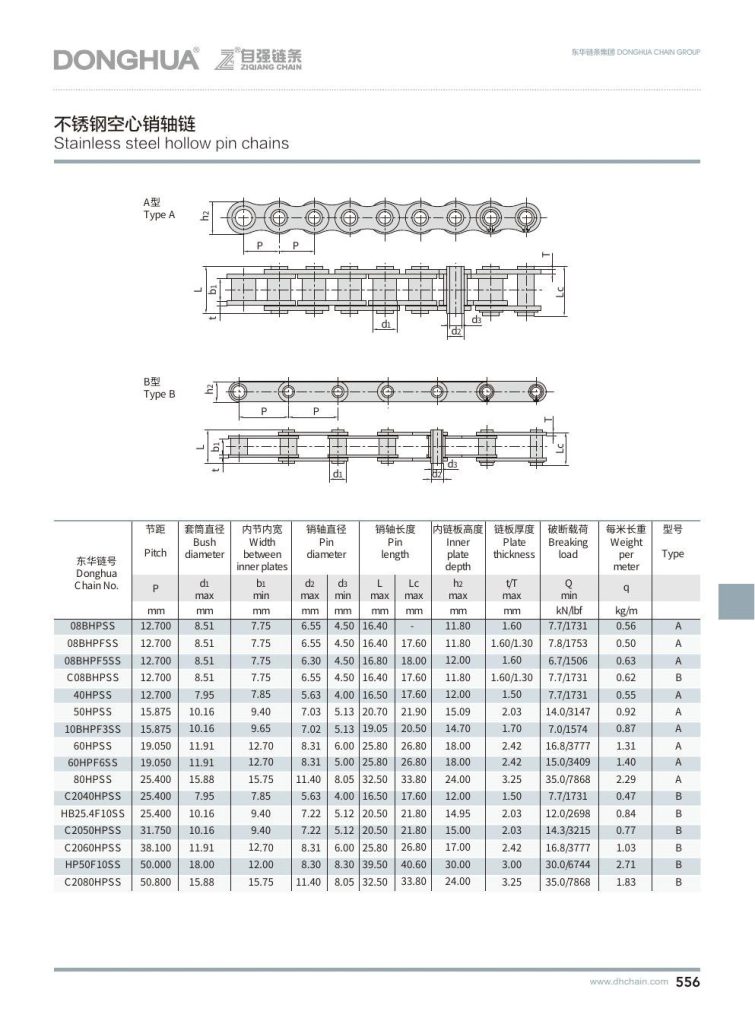
The uploaded 2017 product catalogue identifies hollow pin conveyor families including MC, FVC and ZC, as well as stainless steel hollow pin chains. Those tables are valuable for model identification and dimensional comparison, but a historical tensile or breaking value is not an allowable working load and does not replace a current production confirmation.
Frequently asked questions
What is the minimum information for a cross-reference?
Model if known, measured pitch, hollow-pin bore, roller or bush diameter, inside width, plate height, sprocket tooth count and a photo of the attachment arrangement.
Should I replace sprockets with the chain?
Inspect them. If tooth wear is significant, replacing the chain alone can shorten life and create poor engagement.
Can a historical catalogue value be used as a current guarantee?
No. Use it for identification and comparison; confirm current material, heat treatment and commercial specification at quotation stage.
Practical verification workflow
Technical selection should move from identification to verification. First identify the dimensional family and pitch. Next confirm the roller or bush arrangement, hollow-pin bore and the overall envelope against the existing chain or machine drawing. Then verify the sprocket geometry and attachment path. Finally, review load, speed, shock, environment and maintenance requirements before approving the production configuration.
For troubleshooting, separate symptoms from causes. Rapid elongation can come from overload, contamination, poor lubrication or misalignment. Side wear can come from guides or sprocket offset. Tight joints can result from corrosion, contamination, attachment interference or incorrect assembly. A good maintenance record helps determine whether a chain change is actually needed or whether the conveyor geometry should be corrected first.
Engineering information to collect before quotation
A useful RFQ should describe the chain as part of the complete machine. Record the exact pitch, hollow-pin inside diameter, roller or bush arrangement, width between inner plates, sprocket tooth count, shaft centers and the geometry of every cross-rod, flight or carrier that passes through the hollow pins. If the equipment is a replacement project, include photographs of the old chain beside a scale and of the sprocket tooth profile. These details are more reliable than a model name alone when equipment has been modified during its service life.
Operating duty should include conveyor speed, estimated chain pull, product weight, accumulation, starts per hour, shock loading, vertical lift, guide friction and the maintenance interval expected by the plant. Environment matters as well. Moisture, cleaning chemicals, food-product exposure, abrasive dust and temperature can change the preferred material, lubrication approach and guide design. Catalogue tensile or breaking values are not a direct allowable working load and should not replace an engineering duty calculation.
Installation, commissioning and maintenance
New chain should be installed on sprockets that match the selected pitch and roller or bush geometry. Check shaft and sprocket alignment before tensioning. Twin strands connected by cross-rods should be timed so that the rods do not force the chains out of phase. During commissioning, run the conveyor first without product and then under representative load while checking for guide rubbing, tight articulation, roller skidding and attachment interference.
After the first production interval, inspect elongation, stiff joints, corrosion, plate contact and cross-rod wear. Record measurements at consistent points so trends can be compared. Unequal wear between strands often indicates alignment, load-distribution or guide-friction issues that should be corrected before a replacement chain is installed.